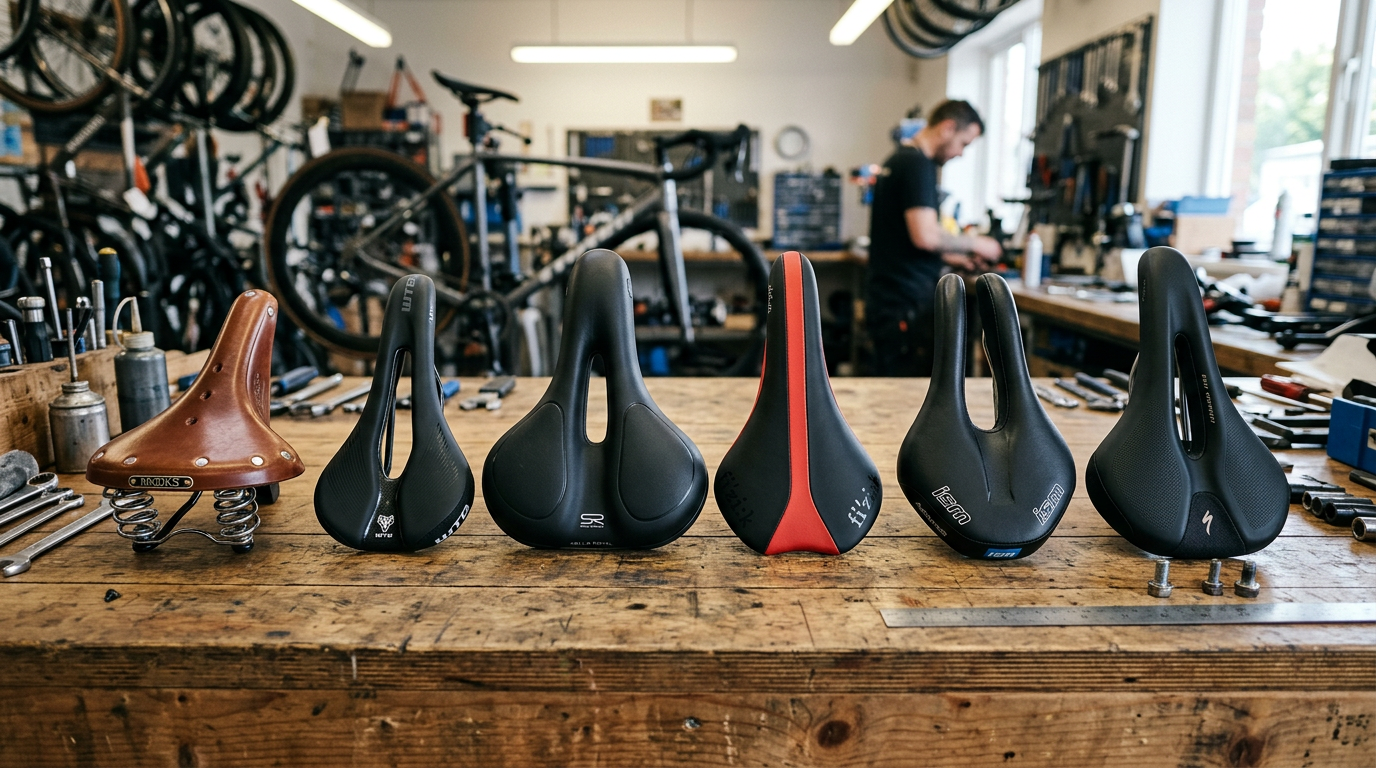
Your Stock Saddle Probably Doesn’t Fit
Most bikes come with a generic saddle that suits almost nobody perfectly. Saddle discomfort is the second most common reason cyclists seek a bike fit, and it’s often the easiest to fix once you understand one key measurement: your sit bone width.
What Are Sit Bones?
Your sit bones (ischial tuberosities) are the bony points at the bottom of your pelvis. They’re designed to bear your weight when sitting. On a bike, your sit bones should rest on the widest part of the saddle.
The problem: sit bone width varies enormously between individuals, typically 90mm to 150mm. A saddle designed for 130mm sit bones will cause pain for a rider with 110mm sit bones, and vice versa.
How Sit Bone Width Is Measured
Professional bike fitters use several methods:
- Gel pad impression: you sit on a memory foam pad, and the indentations reveal your sit bone spacing
- Digital pressure tools: devices like the SmartCube Pro use pressure-sensing technology to measure width precisely
- RETUL DSD: Retul’s Digital Saddle Device uses 768 pressure sensors to measure sit bone width with sub-millimeter precision
Once measured, the fitter recommends a saddle width that supports your sit bones without being so wide that it causes chafing.
Beyond Width: Pressure Mapping
Sit bone measurement is the starting point, but dynamic pressure mapping takes it further. Systems like gebioMized use a thin flexible film with 64 sensors placed on the saddle while you pedal. This reveals:
- Where pressure concentrates during actual riding (not just sitting still)
- Left/right balance: whether you’re loading one side more than the other
- Soft tissue pressure: whether the saddle nose is causing numbness
- Position changes: how pressure shifts when you move to the drops or hoods
Common Saddle Mistakes
- Too narrow: sit bones hang off the edges, pressure on soft tissue
- Too wide: inner thighs rub on saddle edges during pedaling
- Wrong shape: flat vs curved, cutout vs solid depends on your pelvic tilt and flexibility
- Wrong tilt: even 2-3 degrees of nose-up tilt can cause significant discomfort
The Bottom Line
Don’t suffer through saddle pain hoping it’ll go away. A sit bone measurement takes 5 minutes and costs nothing at most bike shops. If you’re still in pain, a professional fit with pressure mapping (RM400-RM800) will pinpoint the exact issue.