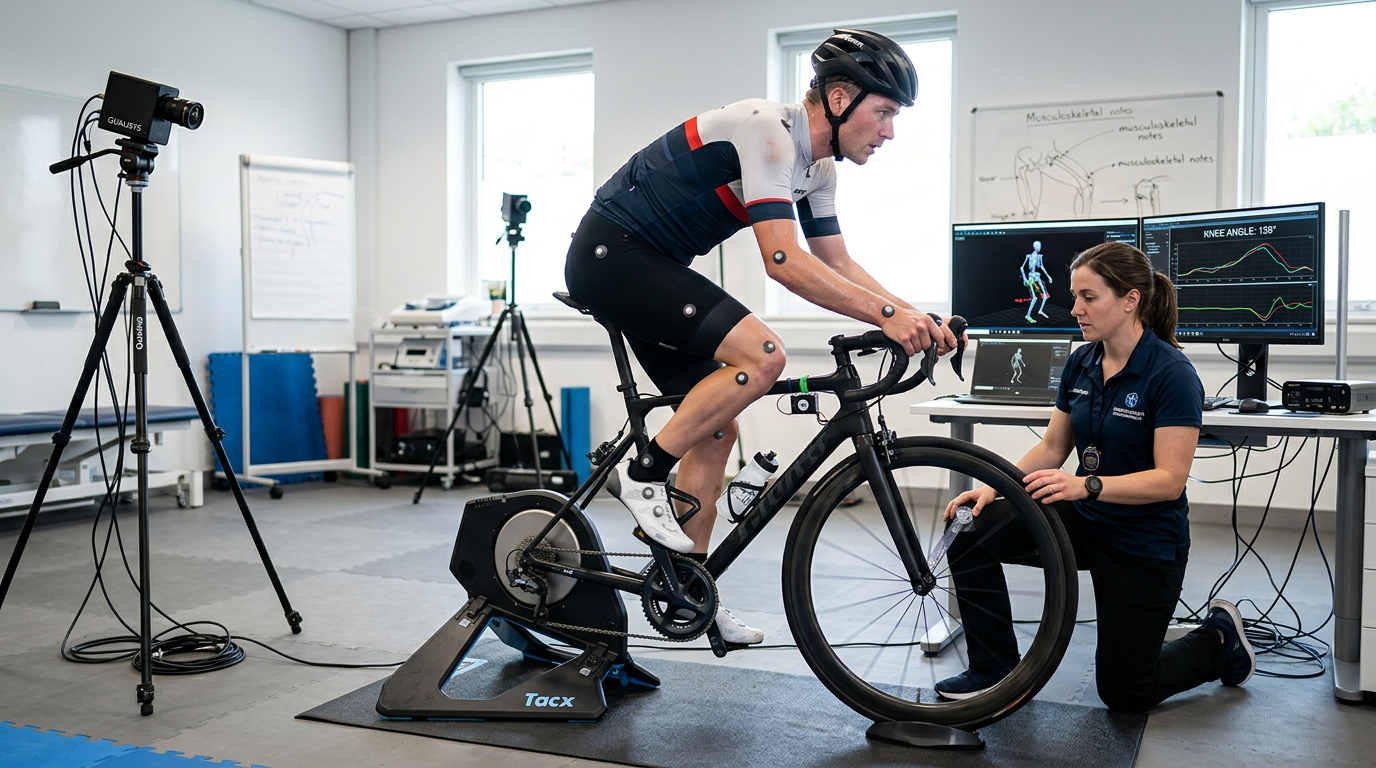
The Science Behind Bike Fitting
Bike fitting has evolved from art to science. Recent research provides strong evidence that professional fitting meaningfully reduces cycling-related pain and injury risk.
Key Studies
Physiotherapy-Led Bike Fitting and Knee Pain (2025)
A study published in Physiotherapy Theory and Practice examined the impact of physiotherapy-led bike fitting on recreational road cyclists with knee pain.
Results:
- Worst knee pain improved by 2.52 points on a 0-10 scale
- Average knee pain improved by 1.81 points
- Least knee pain improved by 0.70 points
- All improvements measured at 12 weeks post-intervention
The intervention combined bike fit adjustments with tailored education and exercise prescriptions, suggesting that the best outcomes come from fitting plus guidance, not fitting alone.
Source: PubMed: Impact of physiotherapy-led bike fitting on knee pain
Long-Term Effects of Kinematic Bike Fitting (2022)
A prospective cohort study published in the International Journal of Environmental Research and Public Health tracked riders after a kinematic-oriented bike fitting process.
Results:
- Pain, fatigue, and discomfort were reduced for at least 4 months post-intervention
- Knee/thigh pain showed “large effect sizes”, meaning clinically significant improvement
- Benefits persisted well beyond the initial adjustment period
Source: PMC: Long-Term Effects of Kinematic Bikefitting
Cycling and Knee Osteoarthritis (2024)
A study using data from the Osteoarthritis Initiative found that regular cyclists were:
- 17% less likely to have frequent knee pain
- 21% less likely to have symptomatic osteoarthritis
While this isn’t directly about bike fitting, it confirms that cycling with proper form is protective for knee health, and a bike fit is the best way to ensure proper form.
Source: PubMed: Bicycling and Knee Osteoarthritis
What This Means for You
The research consistently shows:
- Bike fitting works: it measurably reduces pain, not just subjectively
- Effects are lasting: improvements persist for months, not just days
- Knee pain responds best: if you have cycling-related knee pain, a fit is one of the most effective interventions
- Education matters: the best outcomes combine fitting with understanding why the changes help
When to Get Fitted
If you’re experiencing any recurring pain during or after rides, the evidence supports seeking a professional fit rather than ignoring it or adjusting blindly. A RM250-RM800 investment now could prevent chronic issues that cost far more to treat.